Saturday, March 19, 2016

Alpine Skiing in Alaska

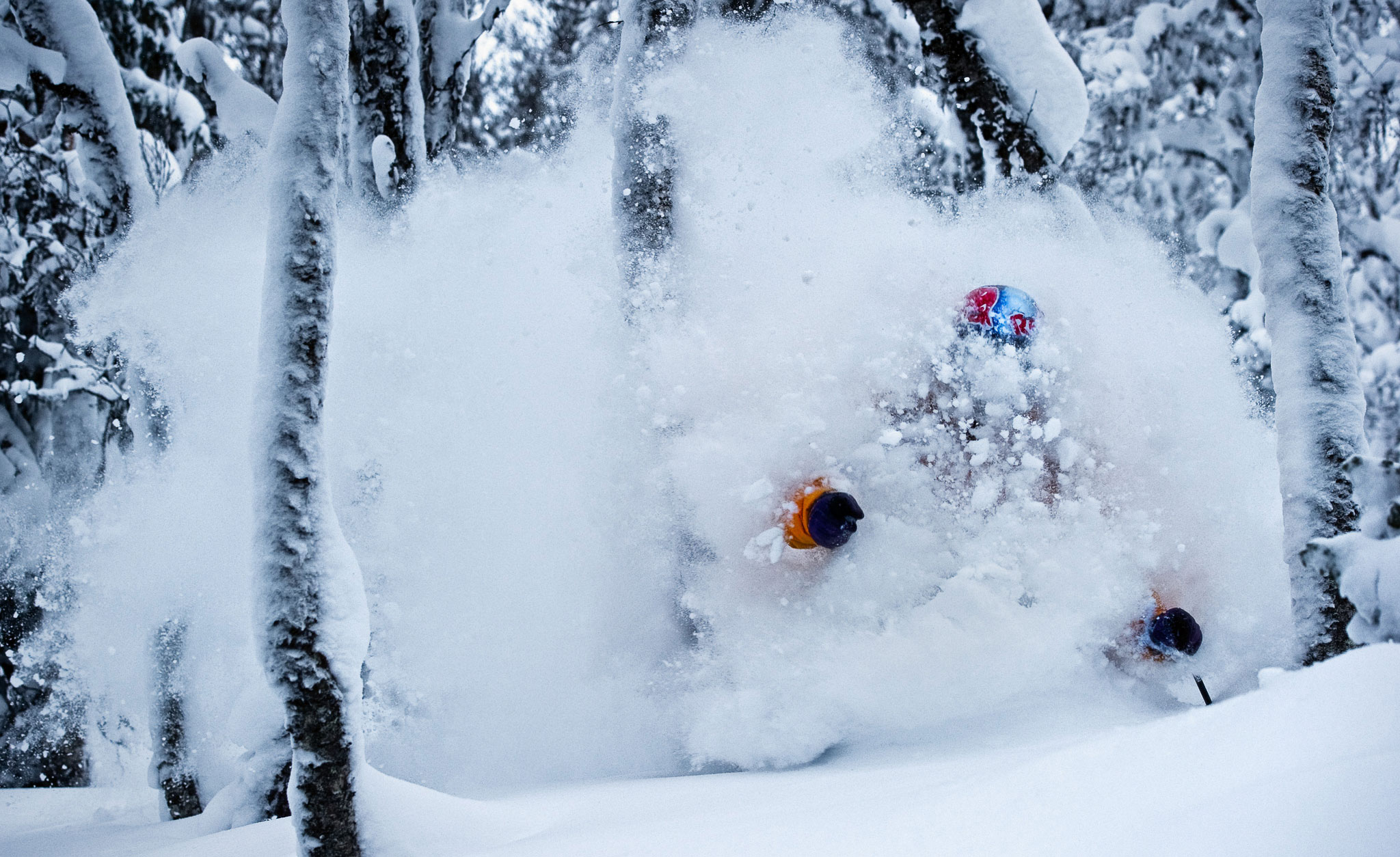
Alaska has long been known for having some of the best big mountain skiing in North America. With its sprawling Alaska Range and a max elevation of 20,310 ft atop Mt. Denali there is no shortage of stellar skiing opportunities. The mountains in the Alaska Range also receive an average of 650 inches of snow that blankets an area of 95,000 sq miles. The main, most prominent resort in Alaska is Alyeska Resort which is conveniently situated just an hours drive from the state capital of Anchorage. While Alyeska Resort is most certainly not the largest resort around with only 76 trails and 1,610 skiable acres, it boasts and is considered to have some of the most challenging terrain out of any resort in North America. 37% of their trails are rated expert/advanced and the resort possesses a respectable vertical drop of 3,200 ft. Like the resorts in the Cascades, none of the resorts in Alaska have any ski towns filled with attractions or any other external amenities. The people who end up going to Alaska to ski are the ones who really care about a great ski experience with deep snow and expansive terrain. While Alyeska is definitely a quality resort that offers great in bounds skiing, most people come to Alaska for the truly world class powder heli-skiing and backcountry skiing. Alaska's peaks and mountaintops are the perfect environment for stellar heli and powder skiing as they are much taller, steeper, and more closely positioned next to one another compared to Colorado's peaks. Because Alaska's peaks are positioned closer to one another a person can get in more runs simply because the helicopter has a shorter distance to cover. One of the most renown heliski tour guide companies is the aptly named Alaska Heliskiing company as well as Mica Heliskiing. Both companies have been around for a little over a decade with Alaska Heliskiing getting founded in 2001 and Mica Heliskiing in 2003. Both companies guide you around the mountains surrounding the town of Haines, Alaska. With each company you are organized into either groups of four or ten depending on your preferred package and lead by highly trained guides who are well versed in the mountain topography. Both companies offer two packages that range from two to five days in length. The packages that are available from the two companies vary slightly in terms of what they offer and the cost. Both the Alaska Heliskiing packages are slightly cheaper in price but the base package doesn't provide cooked meals, while both packages from Mica Heliskiing do provide cooked meals. The terrain that each company resides over along with the guides play a role in determining which company to choose. The price may be the final deciding factor, and while all four packages from the two companies are expensive, if you're a true lover of skiing and want a once in a lifetime experience that you'll remember forever shell out the 5,000 dollars and book a trip. 


Tuesday, March 15, 2016

Alpine Skiing in the Cascades

Skiing in the Cascades of Oregon and Washington has been and continues to be one of the most underrated places in the country to ski. None of the resorts in Oregon or Washington have any of the fancy amenities or other attractions such as a ski town filled with fine dining and shopping that so many other western ski resorts pride themselves on. The resorts in the pacific northwest have for the longest time attracted mainly die hard ski bums and locals, and are only just now beginning to attract a broader skier base. In this post I'm going to focus on the six biggest and most recognizable resorts in the pacific northwest, four in Oregon and two in Washington. There are two major mountains, both dormant volcanoes, where the four Oregon resorts are located, Mt. Hood and Mt. Bachelor. Three resorts are situated on Mt. Hood, Mt. Hood Ski Bowl, Timberline Lodge ski area, and Mt. Hood Meadows. The fourth prominent Oregon resort is situated at Mt. Bachelor ski area. The three resorts at Mt. Hood are all best known for something different. Mt. Hood Ski Bowl has long been considered more beginner and family oriented since it has the least amount of vertical drop and the most green and blue trails out of the three Mt. Hood resorts. Timberline Lodge ski area has the smallest skiable terrain but also the highest point of lift accessible terrain and is the only resort in the lower 48 states with consistent chairlift accessible summer skiing. Mt. Hood Meadows is considered by many to be the premier Mt. Hood resort as it has the most skiable terrain, the greatest variety of challenge and the greatest vertical drop. Mt. Bachelor ski area is the largest ski resort in Oregon in terms of sheer skiable terrain, but is also the farthest away from the major population center of Portland. Native Oregonians who live around the major cities of Portland and Corvalis tend to flock to the trio of Mt. Hood resorts due to their relatively close proximity to the two cities. Residents of Bend, the third largest city in Oregon in terms of population size, favor Mt. Bachelor due to the easy twenty minute drive it takes to get there. All four Oregon resorts share one thing in common though, which is the rustic, more undeveloped nature of the base area and the main emphasis being on the quality of skiing. All four Oregon resorts have a nice variety of trail difficulty and they all receive approximately the same amount of snow, so what separates them is the in bounds trail terrain and the backcountry terrain as well as the overall skiing vibe of the resorts. I haven't been to any of the pacific northwest resorts yet so I can't attest to what the vibe is like, but I do know that each of the resorts has its own distinct backcountry experience. Mt. Hood Meadows is generally considered to be the go to resort for eastern oregonians looking for a decent backcountry offering, while Mt. Bachelor has the best backcountry offering for inland oregonians. Moving onto Washington the two most prominent resorts with the most to offer are Stevens Pass and Crystal Mountain which are both conveniently located around an hours drive from the major population hub of Seattle. Stevens Pass is located closer to Seattle and Tacoma which means it is usually the first skiing option for Seattlites. Crystal Mountain on the other hand due to its farther distance from the major cities tends to attract fewer people even though it boasts a much higher max elevation and twice the amount of skiable terrain. The two Washington resorts mentioned in this post have more in common than the four Oregon resorts as both Stevens Pass and Crystal Mountain have roughly the same backcountry access and terrain. One thing that all six pacific northwest resorts share in common is the general vibe which I would assume is much more laidback and less stuffy than some of the comparable Colorado or Utah resorts.


.


Tuesday, March 8, 2016

Alpine Race Skiing vs. Nordic Race Skiing Part 2

Continuing off my last blog post, it is very evident that alpine race skiing and nordic race skiing are vastly different from one another. Nordic race skiing in comparison to alpine, while still being based on technique, places a much greater emphasis on endurance. The average nordic ski race length is around 25 km which is only a little bit shorter than a marathon. And like a marathon course for runners, the average nordic ski race course goes up and down, making it extremely grueling and exhausting for even the fittest racers. To gain an edge racers train for hours at a very intense pace while refining their technique and race strategy. Race strategy plays a huge role in nordic ski races while having almost no impact in alpine ski races due to the missing endurance component. Nordic ski racers have to decide either to go out fast and hope they can hold onto the lead that they build or go out slow and hope they can catch people from behind. Perfecting your race strategy is certainly important for any nordic ski racer, but refining your technique and maximizing the usage of your gear are arguably just as important. Technique is really important for a nordic ski racer because, when racing, a racer needs to be as energy efficient as possible and by tweaking your technique a racer can preserve just the slightest bit of energy that gives he/she the extra little boost at the end of the race. A racer needs to know the exact time at which he or she should use one technique versus another which again plays into race strategy. How a racer utilizes his or her gear can also have an impact on the final result of a race, particularly if their gear is used in an ineffective manner. One of the few similarities between nordic ski racing and alpine ski racing is that in each the racers wear super tight, full bodied suits to improve aerodynamics and reduce drag. Nordic ski racers suits are not padded in certain areas like those of alpine racers because nordic ski racers never hit any gates. Also unlike alpine racers, nordic racers don't wear protective helmets or goggles as there is no risk of any high speed crashes. The skis, boots, and poles that nordic ski racers use are also much different than those used by alpine racers. The skis are much thinner and lighter with little to no camber, making them more suited for going in a straight line. The boots are also much lighter and more maneuverable due to the fabric based materials and reduced number of buckles. The poles on the other hand are usually longer to generate power, and, consequently heavier. articleLarge.jpg (600×255)     Mt-Borah-Suit.jpg (350×442)yellowstone-ski-festival-skis.jpg (500×375)325454_325454_1 (400×400)

Monday, January 25, 2016

Alpine Race Skiing vs. Nordic Race Skiing

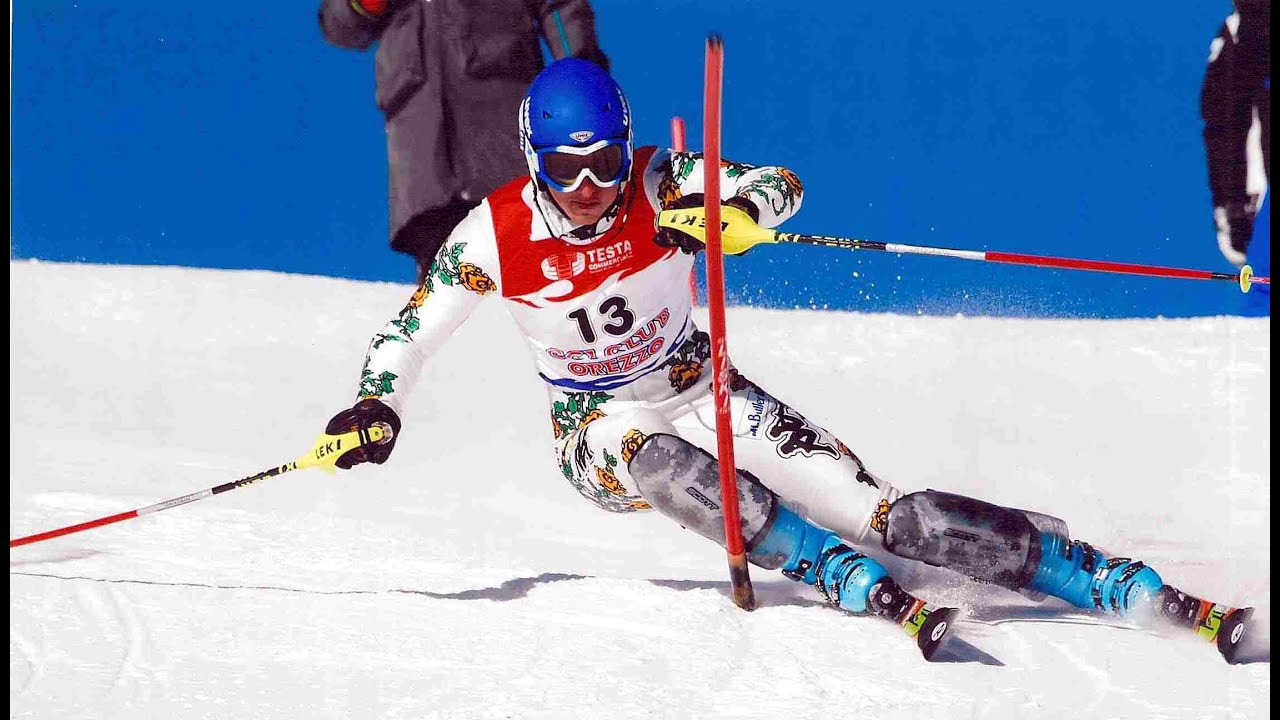
There are two forms of ski racing, alpine ski racing and nordic ski racing. Alpine ski racing is obviously all downhill, while nordic ski racing takes place on flat or uphill terrain. Within each different form of ski racing there are various events that people compete in. The four major events in alpine ski racing are, in order of course length, slalom, giant slalom, super giant slalom, and downhill. All four of these alpine ski racing events share one thing in common: they all involve a course set up with gates of a various sort. Giant slalom, super giant slalom, and downhill all share the same type of gate known as a flex gate. Each gate in the giant slalom, super giant slalom, and downhill is composed of two flex poles set up eighteen inches apart from one another with a "flag" or other piece of fabric wrapped around the two poles in the middle. The slalom discipline involves a gate solely composed of one flex pole that is either blue or red. The distance between each gate also gets progressively farther as you move up from slalom through downhill. The average course lengths for slalom, giant slalom, super giant slalom, and downhill are 600 m, 900 m, 2000 m, and 3500 m respectively. Some of the most famous race courses include the Birds of Prey in Beaver Creek, Chamonix France, Lake Louis Canada, Kitzbuehel Austria, and Val d'Isere France. These are also some of them most technically challenging courses in the world with some of the steepest pitches and sharpest turns. When it comes to the gear that racers wear during the various races, the one thing that pretty much all racers share in all the races are the skin tight suits. Racers can wear the same suit for all four races with minor adjustments made to the padding configuration of the suit depending on the race event. If one is racing in the slalom event then more padding in the thigh area will be wanted, while in the other three events it's better to have padding in the shoulder and upper arm area. Some of the more distinctive gear for the various events include slalom shin guards to protect your shins and ski pole guards to crossblock the gates. Many slalom racers also elect to use a face guard which is attached to the helmet. In giant slalom and super giant slalom curved poles that contour around the skier provide increased aerodynamics and reduce drag. Giant slalom and super giant slalom skiers also wear arm guards to protect their forearms when they hit the gate. Downhill skiers generally don't wear any additional protection due to their lack of contact with the gates.
20101220__APTOPIX-Italy-Alpine-Skiing-World-Cup~p1.jpg (600×395)maxresdefault.jpg (2269×1296)2561182.jpg (620×400)katie_calder_won_the_30km_gommerlauf_nordic_ski_ra_5455148054.JPG (800×533)

Sunday, January 3, 2016

Alpine Skiing in Canada

When most people think of skiing in North America, they think about Colorado, Utah, or the Sierra Nevadas. Few people ever mention the stellar skiing available in Canada. While not nearly as famed or well regarded as their American counterparts, Canadian ski resorts usually receive just as much if not more snow than the American resorts farther south. Most Canadian resorts also have very comparable terrain and vertical drop. One of the main reasons for why Canadian resorts don't get as much attention or respect amongst skiers globally is that, many of them aren't nearly as well developed or equipped with the features and amenities that are available at American resorts. Many of the Canadian ski resorts, with the exception being Whistler Blackcomb resort, lack a well developed base area or an attractive ski town close by. Due to the lack of additional attributes associated with desirable resorts such as nightlife, fine dining, and shopping, many people view Canadian resorts as a less appealing option in comparison to American resorts. But, there are indeed some very attractive qualities to Canadian resorts, the main one being the abundant snowfall that usually lasts later into the spring. The resorts of Whistler Blackcomb and Revelstoke annually average over 600 inches of snow, some of the highest yearly snowfall totals in North America. The snow quality and consistency at Canadian resorts is also usually lighter and fluffier for a longer duration of the ski season. This makes for more plentiful powder days that are deeper and longer lasting. People in the ski community know that serious ski bums and powder hounds go to mountains like Revelstoke for the unparalleled powder and challenging terrain. Another quality of Canadian resorts that really appeals to the most passionate skiers is the extensive, largely untracked backcountry terrain. There are so many options and available lines to ski in the Canadian backcountry that the opportunities are limitless. The best aspect of the Canadian backcountry is that it is highly accessible by both helicopter and ski skinning. At any of the Canadian resorts you can skin out of the in bounds terrain and into the backcountry from the summit of the mountain. This ease of access into the backcountry is not available at all American resorts like it is in Canada. the-olympic-rings-glow.jpg (550×365)Revelstoke-1.jpg (780×520)one-group.jpg (800×400)

Thursday, December 3, 2015

East Coast Ski Resorts vs. West Coast Ski Resorts

East Coast ski resorts have long been known for their down to earth, family minded atmosphere. Many east coast resorts have legions of die hard, loyal skiers who have been skiing there for decades. Locals who live within driving proximity of their favorite resort flock to it, giving many east coast resorts a very welcoming, unpretentious vibe. This is one of the main differences between east coast resorts and west coast resorts. East coast resorts are much more locally centric and place much more an emphasis on attracting locals. This is probably due to the fact that east coast resorts are much smaller in terms of overall mountain size which entails that fewer skiers end up going to east coast resorts. Because east coast resorts attract fewer skiers every year than there west coast counterparts, local skiers make up a much larger portion of their skier totals which means a greater portion of their profits as well. West coast resorts on the other hand don't need to place such a high emphasis on attracting locals because they make up a much smaller percentage of their skier totals and thus a much smaller percentage of their revenue. Due to the decreased local presence and vibe at west coast resorts, the atmosphere at most west coast resorts is much different. The atmosphere at most west coast resorts is much more tourist oriented and profit driven. This makes perfect sense as west coast resorts have much more to offer which means more tourists will go to those resorts. The biggest draw for west coast resorts is the skiable in bounds and backcountry terrain, as well as the snow quality and quantity. Another attractive feature of most west coast resorts are the mountain towns that surround them. Many of these mountain towns feature high end shopping, luxury accommodations, and fine dining which appeal to the affluent clientele who go to these resorts. These additional attractions are part of what people in the ski industry refer to as apres ski. East coast resorts have almost no apres ski, while west coast resorts tout it.


Wednesday, December 2, 2015

Skiing in the East vs. Skiing in the West

Skiing in the Northeast versus skiing out West can be very different from one another. For one thing, the resorts are very different. In general the resorts and mountains in the Northeast are much smaller in comparison with the ones out West. In the West you have mountain ranges such as the Rockies, Sierra Nevadas, and Cascades that dwarf the Green and White Mountains in the East. Because the West has much larger mountains, the resorts are obviously much larger as well. With bigger resorts and greater in bounds skiable terrain come other differences. The bigger resorts in the West tend to attract larger crowds than the ones in the East which means bigger base and mid mountain lodges are required to accommodate the greater quantity of skiers. Due to the larger crowds at Western resorts, gondolas are seen much more frequently. Gondolas are able to efficiently and conveniently transfer eighty to a hundred skiers up the mountain at a time. They're ubiquitous throughout most Western resorts, but are only featured at one East Coast resort, Jay Peak. Since most Western resorts are much larger in terms of the sheer size of the mountain, the associated mountain town is also usually much larger. Western ski resorts are world renown for having some of the best nightlife in towns that are both welcoming and vibrant. East Coast resorts can't even come close to matching there west coast counterparts in this comparison. When a well versed skier thinks about famed western ski towns names such as Aspen, Tahoe, Jackson Hole, and Salt Lake City come to mind. These four towns also share something distinctly western which is unparalleled powder and backcountry terrain. This is probably the biggest difference between west coast skiing and east coast skiing. At east coast resorts you'll never find deep, airy powder, and are much more likely to hear the piercing, grating sound of skis sliding on ice. You'll also never be able to ski any of the sprawling, expansive backcountry terrain that west coast resorts have to offer.